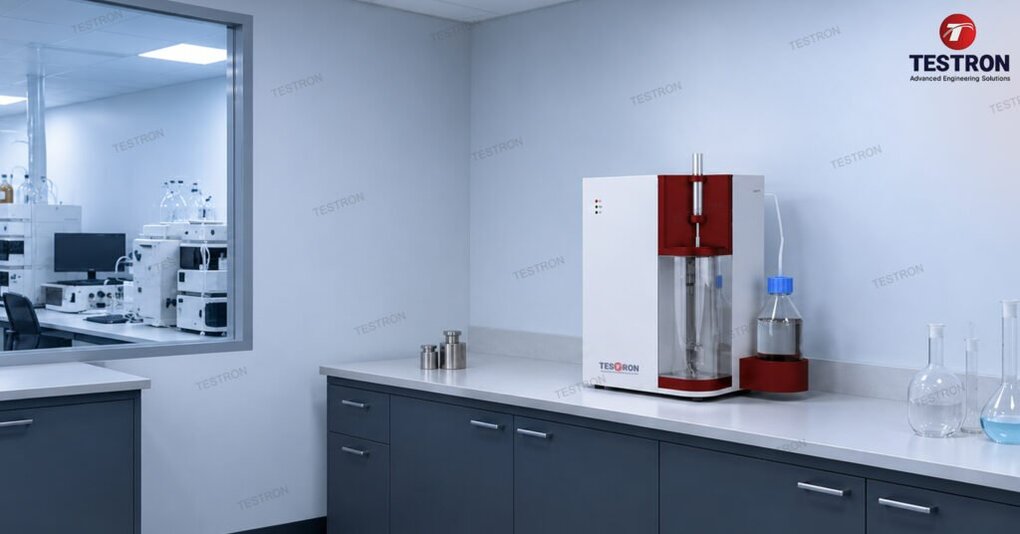
This blog examines how implementing an automated Intrinsic Viscosity Tester in Mexico empowers regional recycling plants and PET manufacturers to secure flawless structural quality and streamline safe chemical testing procedures.
Get a tailored commercial quote this week and find the perfect testing equipment configuration for your lab.
Introduction: Shaping the Future of Sustainable Plastics in North America
The industrial division of Mexico is evolving, and the quality control in the plastic industries is getting more intense. From the recent records, recycling over 50% of its domestic polyethylene terephthalate (PET) plastic is happening to keep things environmentally-friendly.
Whether you are a plastic bottle manufacturer or a high-grade food-safe manufacturer, your lab requires more than simple sorting and washing; it demands molecular precision. That’s why you need something unique by your side, and that’s where Testron’s intrinsic viscosity tester in Mexico.
It plays a vital role by providing an accurate determination of the molecular weight and polymer structural integrity of recycled materials. One small change in your quality control lab can bring things together between raw waste and premium-grade manufacturing output.
Therefore, relying on cutting-edge material testing laboratory equipment is the key to remaining competitive under international supply standards.
Want more customized options? Share your current testing challenges with our team from the verified intrinsic viscosity tester manufacturer today to receive a personalized analysis report for your laboratory.
Striking the Balance: What is Intrinsic Viscosity and Why Does It Rule PET Processing?
Intrinsic viscosity (IV) serves as an indirect measurement of a polymer’s molecular chain length. From virgin plastic to collected post-consumer scrap, a certain amount of heat can cause a phenomenon known as hydrolytic degradation. This happens because of certain moisture and temperature changes.
To test these parameters, you need the best and an automated intrinsic viscosity testing machine.
If the IV level drops too low, it is not good for a newly blown plastic bottle. A minor change in pressure and temperature can cause deformation. That’s why your lab needs an industrial intrinsic viscosity meter or an advanced online intrinsic viscosity analyzer.
This one addition can give exact data needed to fine-tune drying times, adjust extruder melt temperatures, and balance raw material blend ratios.
Consider the following technical dynamics for the specific pet bottle testing equipment:
- Molecular Weight Correlation
- Processability and Melt Strength
- The Problem of Hydrolytic Degradation
- Economic Value Optimization
You need precise intrinsic viscosity testing equipment to counter all the odds. Let’s not jeopardize your structural integrity and brand trust – connect with the verified suppliers of IV Tester for PET in Mexico and other territories of North America!
Safeguard your lab with the best intrinsic viscosity testing equipment – Claim your complimentary technical catalog now to learn how automated testing eliminates guesswork.
Meeting Global Demands: Compliance with International Quality Standards in Mexican Labs
Implementing a standard Intrinsic Viscosity PET test method is important for labs that demand technicians who have practical insights about the manual handling of caustic, volatile solvents like phenol, tetrachloroethane, or o-dichlorobenzene.
One small change can keep you out of traditional workflow and introduce the best & sustainable support. Achieving complete regulatory compliance brings deep structural benefits to your laboratory operations:
- Elimination of Operator Discrepancies
- Drastic Safety Improvements
- Audit-Ready Digital Trails
- Reduced Lab Consumables Overhead
Also, an automated intrinsic viscosity measurement instrument guarantees repeatable compliance with ASTM and ISO benchmarks. Also, understand the following standards and their usage in the real-world cases of Mexico and around the other countries:
Regulatory Standard | Target Metrics & Primary Purpose | Typical Testing Materials Covered |
ASTM D4603 | Standard Test Method for Determining Inherent Viscosity of PET by Ubbelohde Viscometer | Polyethylene Terephthalate (PET), Bottle Flakes, Preforms |
| ISO 1628-5 | Determination of the viscosity number and limiting viscosity number of thermoplastic polyesters | PET, PBT, PCT, and generic liquid-state copolyesters |
| DIN 53728 | Testing of plastics; determination of the viscosity number of structural polymers | Polyamides (PA), Polyesters, and Engineering Olefins |
GB/T 17931 | National standards for premium food-grade structural polyester commodities | Packaged consumer goods, drinking water container lines |
Want more clarity about the instrument? Schedule a virtual live-demonstration with our compliance intrinsic viscosity tester suppliers this week to see automated standard verification in action.
A Comparative Technical Breakdown: Testron Group’s TT-IVS200 vs. TT-IVS200V2
When selecting the ideal intrinsic viscosity measurement instrument, you need to cross-check every possible detail. Testron Group offers two distinct configurations engineered to handle varying industrial workloads with extreme accuracy.
| The Compact Powerhouse: TT-IVS200 | The Enterprise High-Output Station: TT-IVS200V2 |
|
|
In short, the TT-IVS200 comes as an excellent entry point for growing regional laboratories. On the other hand, the high-throughput TT-IVS200V2 delivers the multi-channel automation required for large-scale production facilities.
Request a custom commercial proposal on the intrinsic viscosity tester cost today to see how our automated solutions fit your budget.
Conclusion
An automated pet bottle testing equipment, like an intrinsic viscosity tester in Mexico has evolved from an optional laboratory upgrade to an operational necessity. Ensuring your PET polymer chain integrity remains stable is the single most effective way.
It is time to secure a permanent competitive edge in Mexico’s rapidly growing sustainable economy. Get your hands on the best and receive a tailored guide about the Intrinsic viscosity tester pdf file now – Email us now!