
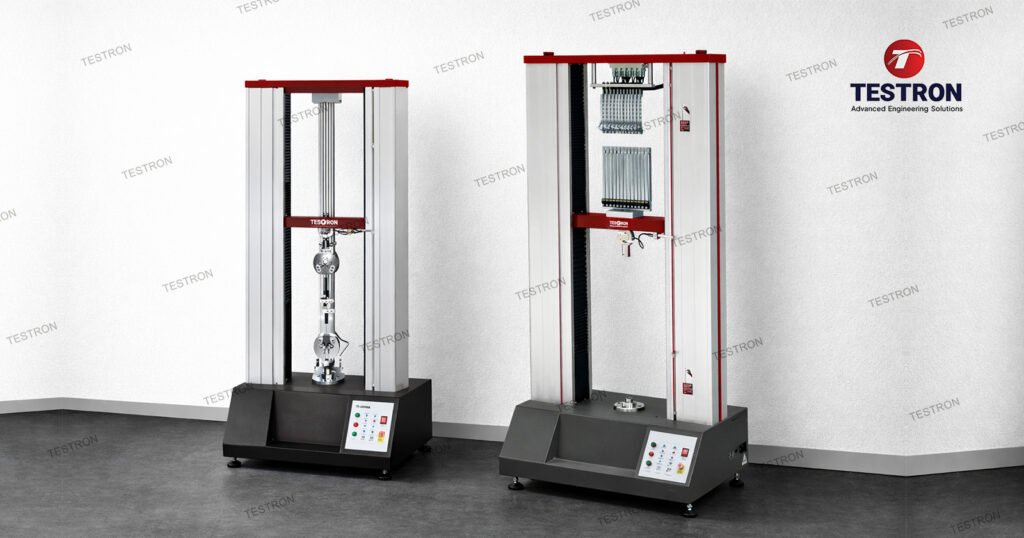
Introduction: Understanding the Core of the UTM
The use of a universal tensile testing machine is not uncommon in different industries, and labs use it to achieve unmatched results before mass production. In short, UTM is the heart of material testing, as it delivers various methods to determine whether a sample can withstand certain wear & tear or external forces and pressures.
The “universal” label stems from its ability to perform not just tensile tests, but also compression, bending, and shear tests by simply swapping the modular grips and fixtures. Let’s decode what lies beneath the right tensile strength testing machine in Australia & get in touch with all the required training and installation stuff seamlessly from experts at Testron!
Getting into the Technical Breakdown and Key Features of Universal Testing Machine For Tensile Strength
Modern tensile strength tester machines utilize high-precision sensors and servo motors to ensure smooth, vibration-free load application. This is critical for maintaining a constant strain rate, as required by international standards.
For advanced load cells, we ensure the highest accuracy. That’s why Testron universal testing machines have the sensors that offer Class 0.5 accuracy. This means the recorded force is within ±0.5% of the actual value.
Talking about the versatile frame types, let’s take a look at the following tensile strength test machines:
- Single-Column Series (e.g., TT-SC2000): Best for low-force applications (up to 2kN or 5kN). These are single bench-top units perfect for testing medical devices, thin films, and textiles.
- Dual-Column Series (e.g., TT-DC Series): Ranging from 2kN to 20kN, these are the workhorses for plastics, rubber, and light metals.
- Electro-Hydraulic Series (e.g., TT-EH Series): Massive floor-standing units reaching up to 2000kN, specifically designed for structural steel, concrete, and heavy-duty alloys.
- TT-HT300 (High Temperature): A specialized tensile strength test machine equipped with a thermal chamber that can reach up to 1200°C
Elevate your laboratory’s testing capabilities with the precision and power of our ultimate tensile strength testing machines. Contact our Australian experts today!
Professional Installation: Setting the Foundation for Accuracy
The installation of a machine for testing tensile strengthis a specialized procedure that goes far beyond simply unboxing the equipment. For a tensile strength testing machine in Australia, environmental factors such as humidity, power stability, and floor leveling can significantly impact the reliability of your data.
At Testron, we ensure that the Tensile strength checking machine is set up in a “zero-stress” state, meaning the frame is perfectly aligned, and the load cell is shielded from external vibrations.
Let’s understand what the attributes our experts follow before installing any model of the tensile strength testing machine in Australia are:
- Site Preparation: Ensure the laboratory floor can handle the weight (up to 1300kg for hydraulic models) and that the power supply is a stable 220V AC with proper grounding to prevent electronic noise.
- Mechanical Leveling: Technicians use precision spirit levels to ensure the crosshead moves perfectly vertically.
- Software Integration: Modern machines are computerized. We ensure the software can communicate seamlessly via RS232 or USB ports for real-time data acquisition.
- Safety Verification: This involves testing the automatic overload protection. This will be triggered at at 102%-110% of max load. We always verify that the emergency stop and travel limit switches are fully functional.
Stop guessing and start measuring – Request a free product demo and turn your equipment into a reliable asset with the assistance of one of the finest Tensile strength testing machine manufacturers!
Comprehensive Training: Empowering Your Workforce
In Australia, training programs are tailored to ensure that operators understand the nuances of specimen preparation, software navigation, and standard compliance.
Even the most advanced machine for testing tensile strength is only as effective as the person operating it. Comprehensive training is essential to avoid human error, which is the leading cause of “out of spec” results.
Let’s understand what actually happens in the training session of a tensile strength testing machine in Australia:
- Operators learn how to use notch cutters and specimen dies to ensure samples are consistent.
- Training covers how to set up “test methods,” defining parameters like crosshead speed and other vital functions.
- Understanding the Stress-Strain curve is crucial. Operators are trained to identify the yield point, elastic modulus, and the ultimate tensile strength (UTS) from the generated graphs.
- Maintenance awareness covers daily checkups and trains operators to check the grip faces for wear to ensure the machine’s longevity.
Empower your team with the knowledge to conquer complex material challenges and maximize lab efficiency with the installed tensile strength testing machine in Australia.
Conclusion
Achieving excellence in material testing requires a holistic approach that combines high-quality hardware with professional expertise. By selecting the right tensile strength testing machine in Australia, ensuring a meticulous installation, and investing in deep operator training, your organization can guarantee the safety and reliability of its products.
Partnering with industry leaders like Testron Group ensures you have the tools and the support needed to navigate the complexities of modern manufacturing and meet the highest global standards.
Related: Discover the Affordable Universal Testing Machines for Tensile Testing
