
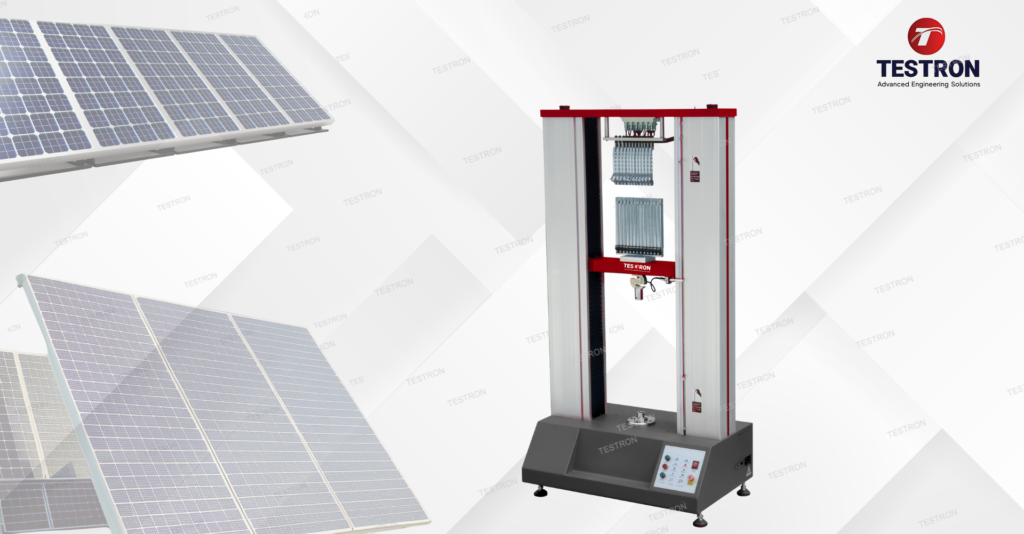
Overview: This guide empowers manufacturers to dominate the PV market by identifying the critical features of a high-accuracy solar cell tester in the USA. Here, you will explore how the TT-SP2000 maximizes ROI through 20-channel efficiency and achieve recognition for durability, reliability, and world-class quality control.
Introduction: Get User-Specific Features for a Solar Cell Tester in the USA
The wide use of solar energy around the world has awakened many manufacturers to invest in this line of production. The wave also attracted many industrialists from the USA, and they are showing more interest in expanding their businesses across the USA, Canada, Latin America, and other parts of the globe.
However, it isn’t just about manufacturing or competing with markets, but to create a legacy among the competitors with the best range of features, productivity, performance, and much more. So, choosing a high-accuracy solar cell tester in the USA is a critical decision that directly impacts production yield and long-term reliability.
Testron’s TT-SP2000 2KN Multi-Channel Solar Cell Testing Machine is the device that ensures users about their right choice and investment in the ideal solar cell tester. With the right features, labs and industries can test the solar panels and know that Testron delivers world-class accuracy and cost-effectiveness.
Join Testron and grow more! Trusting the amazing and eco-friendly solar cell tester manufacturer in the USA starts from here!
Features That Drive Users Toward Testron’s Solar Cell Tester Machine
Every operator purchases a device based on the features, budget, and ROI. Thanks to Testron that they design all types of products that are based on all three important pillars of demand.
Testron’s solar cell testing equipment is engineered with a revolutionary 20-channel system. This means that instead of testing one grid strip or busbar at a time, technicians can perform 180-degree peel strength tests on up to 20 grid strips simultaneously.
Let’s explore more features that drive accuracy within the solar cell testing machine:
- Control mode: Fixed speed, positioning shift, fixed load, and other control modes are optional.
- Automatic zero clearing after the test starts: The measurement system automatically clears the zero.
- Security protection: More than 2 – 10% of the maximum load, automatic security protection. It can automatically detect and calculate the mechanical properties of the sample, and can also manually intervene in the analysis process to correct the automatic analysis results according to the requirements of relevant standards.
- Automatic storage: Automatic storage of test data and test conditions, to eliminate data loss.
- Automatic shift: Automatically switch to the appropriate range according to the load size to ensure the accuracy of the measurement data
- Batch test: For the same parameters of the sample, a batch of tests can be completed in sequence after setting.
- Display mode: Data and curve dynamic display with the test process.
- Curve traversal: After test completion, the curve can be re-analyzed by using the mouse to find the data corresponding to each point on the test curve.
- Curve selection: Stress-strain, force-displacement, force-time, displacement-time, and other curves can be selected for display and printing.
- Unit switching: Force unit such as (g, kg, N, Ib), stress unit such as (kg/mm2, N/mm2, Mpa, Ibf/in2), and displacement unit such as (m, mm, in).
Ready to skyrocket your manufacturing throughput? Consult our experts for a custom quote on your next solar cell testing instrument in the USA!
High Precision with Testron’s TT-SP2000 2KN Multi-Channel Solar Cell Testing Machine
Without accurate reading, it is unwise to achieve the right output in the mass production of any solar cell sample. That’s why Testron takes care of every aspect of accuracy and calibration procedures to attain maximum output.
His level of accuracy allows engineers to detect microscopic inconsistencies in the bond between the busbar and the cell. Later, it is crucial for long-term electrical conductivity.
Let’s take a look at the key precision that the TT-SP2000 solar cell testing device highlights:
- American Precision Sensors: Known for their durability and consistent performance under repeated stress.
- 1/500,000 Force Resolution: Enables the detection of extremely subtle changes in material resistance during the peel or stretch process.
- Level 0.5 Accuracy: Meets the highest tier of international calibration standards, ensuring your data is legally and technically defensible.
- Anti-Interference Technology: Built-in safeguards ensure that electrical noise from the factory floor does not interfere with the sensitive testing measurements.
- Real-Time Data Capture: The system logs data at high frequencies, preventing “peaks” or “dips” in force from being missed.
Precision isn’t just a feature—it’s a requirement for your brand’s reputation. Request a free product demo and ensure your quality control with Testron’s high-precision sensors for the best solar cell tester.
Conclusion
Choosing the right solar cell tester in the USA is an investment in your company’s future. By prioritizing multi-channel efficiency, high-precision sensors, and intelligent software integration, you ensure that your production meets the rigorous demands of the photovoltaic industry.
Partnering with a reliable solar cell tester supplier, such as Testron Group, guarantees that your manufacturing standards remain second to none. For those seeking a balance between high-end performance and a competitive solar cell testing machine cost, join Testron at info@testrongroup.com.
Related: Achieve Maximum ROI with High-Precision Solar Cell Testing Machine
