Executive Summary
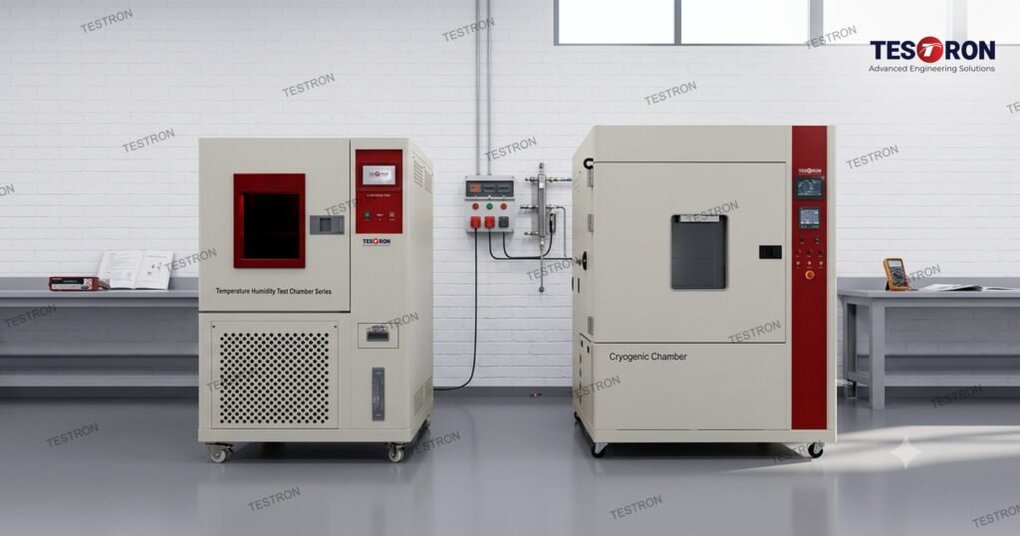
The Environmental Testing Chambers are instrumental to the research and innovation efforts of universities throughout the USA. These systems are used in various applications, such as materials science, electronics testing, aerospace research, biomedical research, and research on renewable energy sources. Temperature and humidity chambers are useful to test products’ performance in different climatic environments, and thermal shock chambers allow for rapid temperature change testing. Long-term environmental simulation studies are possible in climate chambers, and water and dust ingress protection tests are carried out in an IP test chamber, according to industry standards. Spending on high-quality environmental testing equipment will help improve the quality of research and validate product durability, meet regulatory requirements, and aid in the advancement of scientific discovery through universities. Choosing the right supplier for environmental testing chambers means having access to high-performance solutions that are suitable for academic research and future technological innovation.
Introduction
In the U.S., universities and research institutions are becoming more demanding of the accuracy of experimental results and the validation of the products. Growing academic programs and developments in advanced materials science, aerospace engineering, biomedical research, and renewable energy rely on the use of reliable environmental testing equipment more than ever before.
Whether in undergraduate laboratories or graduate R&D facilities, there is a need for instruments that can accurately simulate real-world conditions. The quality of the environmental test chamber allows the researchers to create extreme temperatures, humidity and thermal cycling conditions, resulting in data that is subjected to the highest scientific scrutiny. The choice of a reliable environmental testing chamber manufacturer is an important one for any university that seeks to ensure research excellence.
Why Universities Need Environmental Testing Chambers
Supporting Research Across Every Discipline
The research carried out by universities covers dozens of engineering and scientific disciplines — and almost all of them are related to materials, components, or systems under environmental stresses. A laboratory environmental chamber offers faculty and students a controlled environment in which they can test their hypotheses, determine durability, and test years of real-world exposure in a few days.
Some common use cases in an academic environment are:
- Research validation: Research to ensure that the results of the experiment are repeatable and are scientifically defensible.
- Material science testing: Testing polymers, composites, metals and ceramics for their response to undergo extreme temperature or humid conditions.
- Product durability studies: Engineering departments creating prototypes must test for performance before it’s deployed in the field.
- Aerospace, automotive and electronics research: These industries require powerful simulation under conditions that reflect operational environments.
- Renewable energy R&D: Solar panels, battery cells and fuel cell components all need long term tests in the environmental simulation chamber to model their lifespan performance.
It is not a luxury to have an environmental testing machine in academic settings, it is essential and part of the infrastructure for credible and publishable research.
Applications of Temperature and Humidity Chambers in Academic Research
Precision Climate Control for Complex Testing
The temperature and humidity chamber is one of the most adaptable equipment in any university lab. It allows researchers to subject samples to specific conditions of heat, cold and humidity—from tropical field environments to cold storage facilities.
Humidity and temperature test chamber is widely used for:
- Electronics testing: Evaluating the behavior of circuit boards, sensors and semiconductors when exposed to moisture intrusion and thermal cycling.
- Battery testing: Lithium-ion and future battery cells are subjected to different temperature and humidity cycles to test battery capacity retention and safety.
- Biomedical engineering: Biomaterials, implants and drug delivery systems should be stable in physiologic and environmental ranges.
- Materials Engineering: Delamination, corrosion, mechanical degradation of coatings, adhesives and structural composites.
When searching for a temperature and humidity chamber in the USA, universities should seek a temperature and humidity chamber manufacturer that can provide a test range (configurable), programmable cycles, and data logging. Qualified suppliers of temperature and humidity chamber will also give technical advice on the specification matching of the chamber to the research protocol.
Looking for the right environmental testing chamber for your university or research facility? Talk to our experts and find your solution for temperature, humidity, thermal shock and IP testing applications.
Thermal Shock Chamber Applications for University R&D
Accelerated Stress Testing at Its Most Demanding
The Thermal shock test chamber is an essential instrument for research programs which test parts up to their breaking point. The thermal shock test is conducted with rapid changes between the hot and cold zone unlike standard temperature cycling to which the specimens are exposed that takes years to happen in nature.
Thermal shock testing chamber is widely used in university R&D for:
- Electronics and PCB testing: Solder joints, connectors, chip packages are susceptible to thermal fatigue. Rapid cycling uncovers failure modes before products go to market.
- Aerospace research: Aircraft and satellite parts need to withstand extreme temperature changes during flight. The capabilities provided by the thermal shock chamber in the USA are critical for academic laboratories working with defense contractors.
- Automotive engineering: Thermal shock procedures during vehicle development programs are applied to under-hood components, EV battery enclosures, and structural adhesives.
- Defence and materials research: Knowing how cracks propagate, how materials fail to bond and how they fail by fatigue under rapid thermal cycling helps to design for next generation materials.
Universities should look for thermal shock chamber manufacturers that have short transition times, dual zones, and meet MIL-STD-810 and IEC 60068 standards. A trusted thermal shock chamber supplier will have the equipment to cater to research and safety requirements.
Climate Chambers and Environmental Simulation for Advanced Research
Long-Term Studies in Controlled Conditions
In addition to testing individual components, many university research programs need a prolonged environmental simulation for weeks or months. Stable and programmable conditions found in climate chambers are ideal for long-term degradation studies, aging research and ecological experiments.
In universities, industrial climate chambers are used for:
- Pharmaceutical stability testing: Testing of degradation of active ingredients and formulations over time in a specific temperature and humidity environment.
- Agricultural and biological research: Environmental grow chamber for plant scientists, agronomists and ecologists to grow organisms under controlled photoperiod, temperature and humidity.
- Construction material research: Concrete, sealant and roofing material are exposed to long-term climate simulation to make predictions about their performance during their lifespan.
- Corrosion science: Long-term exposure tests aid universities in characterizing corrosion behavior of coatings and alloys.
Today’s climate chamber testing solutions are more adaptable and compatible — delivering more return on investment for university procurement teams because a single climate chamber platform can be used by a number of departments.
IP Test Chambers for Product Validation and Engineering Programs
Ingress Protection Testing in Academic Environments
Engineering applications, such as those for consumer electronics, medical devices and industrial equipment, must ensure that products are dust and water-resistant. The IP test chamber in the USA becomes an important component in this.
The IEC 60529 defines Ingress Protection (IP) ratings and these are required for products being sold in regulated markets. An IP test apparatus provides university labs with standardized water and dust exposure tests to directly match industry certification requirements.
Common applications in academic engineering programs include:
- Design of enclosures and homes for IoT devices and wearables
- Extensive testing for waterproof connectors and cable glands.
- Design and manufacturing of rugged electronics to operate in the field.
- Testing for medical device enclosures to regulatory standards
The best university partners get from an equipment supplier is equipment from an established IP test chamber manufacturer or IP test chamber supplier. When you purchase high quality IP water test equipment, you can be confident that test results are repeatable and defensible, whether in academic publications or product certification. To compare different IP testing machine options, you need to find those that are compatible with the current IEC requirements and offer a range of IP ratings (IPX1 to IPX8).
Factors Affecting Environmental Testing Chamber Cost
Making Informed Procurement Decisions
Environmental testing chamber cost information is essential for universities to budget appropriately, and to support capital spending demands to the procurement committees. There are a number of factors that can affect the final costs:
- Chamber size and volume: The larger the chamber, the larger the possible size of the specimens or the higher sample throughput but the higher the environmental testing chamber price points.
- Test range and accuracy: Chambers that can handle extreme low temperatures (−70°C and below), or that are high-accuracy and have high humidity, cost more than standard chambers.
- Automation and data logging: Value added, but investment in the climate chamber increases due to the built-in PLC controls and touch screen interfaces as well as the possibility of exporting data to the cloud.
- Thermal shock chamber price: The dual-zone thermal shock units are generally more expensive than the single-zone thermal shock units, due to the complexity of their engineering.
- There are two types of walk in temperature and humidity chambers, entry level benchtop units for teaching lab use are less expensive and larger walk in chambers for large specimen testing are a more large investment.
- The price of IP test chamber: IP testing systems are priced according to the IP rating they are capable of covering and the level of automation in the water delivery and monitoring.
- Compliance and certification: Chambers that meet pre-validated IEC, MIL-STD, or ASTM standards may be more expensive when purchased, but they minimize qualification after purchase.
Universities are encouraged to work directly with an environmental testing chamber supplier to discuss specifications, service packages and academic pricing programs.
Take your research to the next level by using trustable environmental testing equipment for academia and R&D labs. Explore our range of environmental test chambers and find the ideal solution for your laboratory’s testing needs.
Conclusion
One of the most valuable investments a University or Research Institution can make is an environmental testing chamber. Whether in temperature and humidity test chambers that aid the study of batteries and biomaterials or in thermal shock test chambers that help power up the study of aerospace and automotive technologies, these instruments strengthen the credibility and impact of academic research.
To meet the ever-increasing demands of advanced environmental testing solutions at universities throughout the United States, it is essential to work with a partner who is a proven environmental testing chamber manufacturer that has the equipment, technical expertise and value you need. Visit Testron Group‘s variety of test chambers for temperature, humidity, thermal shock, climate, and IP testing.
If you require a temperature and humidity chamber, thermal shock chamber, climate chamber, or IP test chamber, we can help you pick the right chamber. For more information email us at info@testrongroup.com or Call us today to get the details on specifications, pricing, and academic support programs.