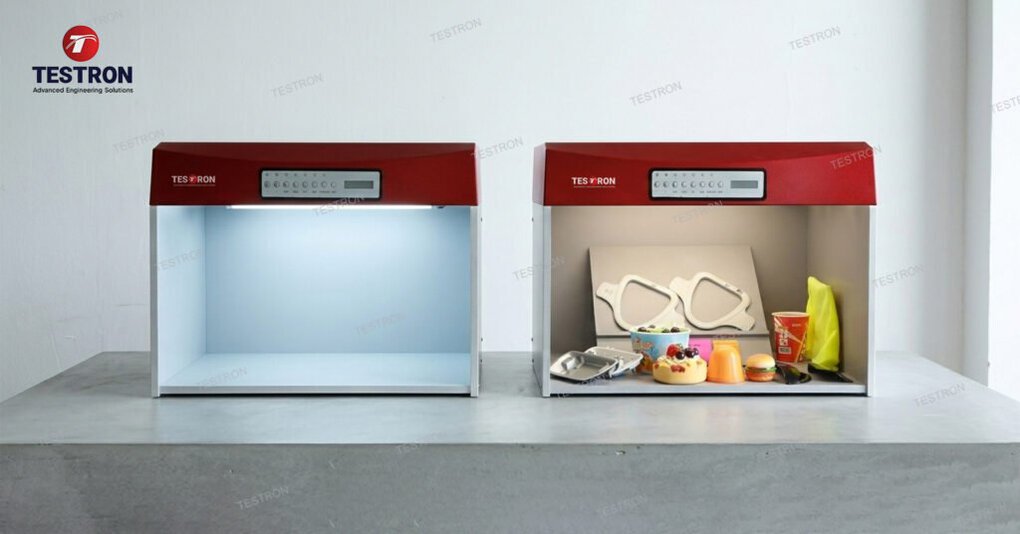
Mastering a Color Light Box in Australia is vital for eliminating metamerism and ensuring global quality standards. This comprehensive guide details essential environmental controls, 45-degree viewing geometries, and lamp lifespan management.
By implementing these persuasive professional protocols, businesses can guarantee flawless color consistency, reduce costly production rejections, and secure a competitive edge in the Australian manufacturing market.
Introduction: Perfect Your Color-Matching Light Box Setup
In the Australian manufacturing world, the rise of accuracy and precision is not uncommon in 2026. The right use of quality control equipment can transform your lab and material testing capabilities.
Whether you own a textile manufacturing site or an industrial coating center, they understand the right use of a color-matching tool that can differentiate costly mistakes and perfect matches.
It’s time to upgrade your lab and manufacturing site with the most advanced color light box in Australia. The TT-B60 and TT-P60 color matching light boxes from Testron are the right tools to match the accuracy and precision set by the operators and QC teams.
Time to plan professional-grade strategies and achieve them effectively – Get in touch with the trusted supplier to learn more about the TT-B60 and TT-P60 today!
Practice 1: Establishing a Controlled Environment for Your Color Light Box
In the Australian context, ambient light pollution is the primary enemy of color consistency. The physical placement of your light box color assessment cabinet is the foundation of accurate colorimetry.
To achieve scientific accuracy, the best color light box supplier standards suggest that the illuminance of the surrounding room should be kept significantly lower than the light inside the cabinet.
To properly isolate your color testing equipment, consider the following environmental controls:
- Use heavy-duty blackout curtains or partitions if a dedicated darkroom is unavailable.
- The walls, ceiling, and floor surrounding the light box should be painted in a neutral Munsell.
- Ensure the unit is on a vibration-free, level surface to prevent any shifting of the internal lamps or the sample positioning during critical evaluations.
- Ensure the room is climate-controlled to prevent spectral shifts caused by overheating.
- Maintain a clear line of sight to the samples.
A light box for color inspection is a precision instrument. By strictly controlling these external factors, you remove the noise that leads to human error.
Don’t let ambient light dictate your quality – Request a free product demo and claim total control over your color workspace with the liable color light box manufacturer!
Practice 2: Keep the Best Viewing Angle
Geometry is just as important as light quality when it comes to visual assessment. In a light box for color inspection, the goal is to view the diffuse reflection; it is the actual color of the object without any interference.
If you view a sample straight-on (90 degrees), you are likely seeing the “shine” of the surface rather than its true pigment.
Let’s understand what the viewing angle should be for the Light booth for color matching:
- Ensure the observer’s eyes are level with the samples.
- A reputable color light box manufacturer includes an internal tilted table, which is fixed at a 45-degree angle.
- Always place your samples in the center of the cabinet floor.
- When comparing the target color to a production batch, place them side-by-side with no gap between them.
- Always align the grain of the sample and the standard in the same direction.
Remove the guesswork & standardize your viewing geometry to match global manufacturing leaders – get all the details about the Color light box for Textile at Testron today!
Practice 3: Detecting Metamerism with Multiple Light Sources
Metamerism is perhaps the most frustrating challenge in color science. It occurs when two samples appear to match perfectly under one light source, but look completely different under another.
Testron’s high-quality light booth for color matching is designed specifically to expose these failures before the product reaches the customer.
To effectively manage metamerism, a technician must cycle through a hierarchy of light sources:
- TL84 / Store Light is essential for Australian retailers. This fluorescent source mimics the cool-white lighting found in shopping malls.
- D65 (Artificial Daylight) is the primary standard for most industries. It simulates the broad-spectrum light of a noon sky.
- Incandescent (A) mimics home lighting (warm yellowish light). This is critical for home textiles and interior paints.
- CWF (Cool White Fluorescent) is widely used in US markets and specific industrial settings, ensuring your export products meet international expectations.
Harness the power of multi-source lighting for total color confidence – get a quote on the pricing from the trusted supplier of a color light box in Australia today!
Practice 4: Routine Maintenance and Lamp Lifespan Management
A color light box in Australia is only as accurate as its lamps. Over time, the gases inside a fluorescent tube or the phosphors in an LED will degrade. This is why every color light box supplier emphasizes the importance of tracking lamp hours.
Best practices for maintaining your color assessment cabinet include:
- Modern cabinets include a digital display that tracks the hours for each lamp. Consult this daily to ensure no source is nearing its expiration.
- Allow fluorescent lamps to stabilize for at least 2 to 5 minutes before performing a critical match.
- Never replace just one bulb in a set. If one D65 tube fails, replace all D65 tubes in the unit simultaneously.
- Only use lamps sourced from a specialized material testing lab equipment supplier.
- Clean the lamps with a dry, lint-free cloth monthly.
Don’t let aging lamps – get expert maintenance tips for the color light box in Australia from Testron!
Conclusion
Investing in a color light box in Australia is the first step toward world-class quality control. However, the hardware is only as good as the protocols you follow.
Whether you are concerned about the color matching light box price or the technical nuances of UV light, following these best practices ensures that your color evaluation remains objective, repeatable, and accurate.
Professionalize your color workflow with our color light box in Australia. Want live demos and quotes on the TT-B60 and TT-P60? Reach out to us at info@testrongroup.com today!