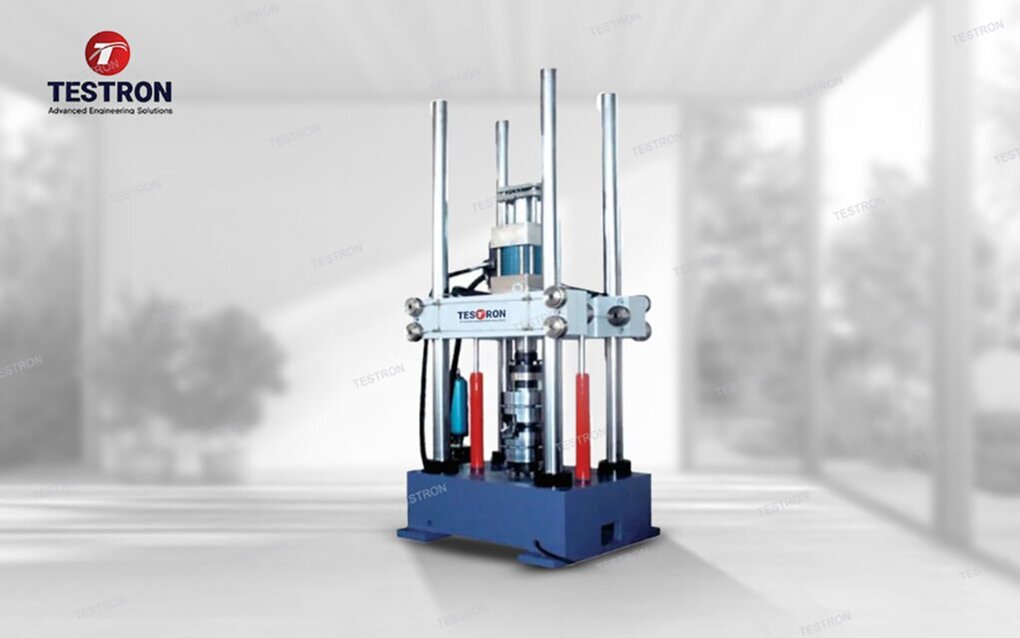
Overview: Let’s take a look at a trusted lab and manufacturer, Testron, to select the ideal fatigue testing machine in Brazil. Time to decode critical specs like load capacity, frequency, stroke, and servo-hydraulic types, plus working principles, and key specifications to follow. Get the expert insights from Testron for reliable metal testing, slashing risks, and boosting product quality—your ultimate buyer roadmap!
Introduction: Understanding the Fatigue Testing Machine in Brazil
Different types of metal testing tools are available across Brazil. Among the popular categories, a fatigue testing machine is specialized equipment. The purpose of using this device is to determine the number of cycles it can endure before failure.
A fatigue testing machine in Brazil can simulate real operating conditions for automotive parts, structural steel, offshore components, and other critical assemblies that face variable loads over time.
There is no need to test a sample multiple times. A fatigue test machine repeatedly bends, stretches, compresses, or twists the material while precisely monitoring its response. The device provides all the important information that helps engineers estimate service life and design safer, lighter, and more cost-effective products.
Looking for data-driven design and fatigue testing machine specifications? Contact our QA team to align everyone on the importance of fatigue testing.
Main Types of Fatigue Test Machines
Buyers should understand the basics first before investing in their desired fatigue testing system in Brazil. Different technologies offer different strengths in terms of force capacity, frequency, control precision, and budget.
Let’s take a look at the types of fatigue testing machines available in the Brazilian market:
Machine Type | Utilities |
Electromechanical fatigue system |
|
Hydraulic fatigue testing machine |
|
Servo hydraulic fatigue testing machine (TT-WS1000) |
|
Reach out to a fatigue testing machine manufacturer for advanced solutions! Ask Testron and get all your answers about your desired solutions in Brazil.
Fatigue Testing Machine Working Principle Explained
A metal fatigue testing machine operates on a specific principle. Each step processes the next to complete the entire sample testing perfectly. That’s why users should know what steps this QC tool follows to work seamlessly.
Whether you use an electromechanical, hydraulic fatigue testing machine, or a servo hydraulic fatigue testing machine, the core goal is the same: understand how components will perform under real-life cyclic stresses before they reach your customers.
Let’s understand the working principles of a fatigue testing machine in Brazil:
- The specimen is clamped in fixtures, and an actuator applies cyclic loads (force-controlled
- or displacement-controlled).
- Load cells and extensometers measure force, displacement, and sometimes strain in real time.
- The controller generates waveforms (sine, square, triangular, or custom) at defined frequencies and amplitudes.
- Tests can be high-cycle fatigue (low stress, millions of cycles) or low-cycle fatigue (higher strains, fewer cycles).
- Data acquisition systems record cycles to failure, crack growth, and other parameters for later analysis.
Map your real loading conditions to the fatigue testing machine’s working principle before you even ask for a quote.
Key Specifications You Must Check Before Purchasing
After the confirmation of the machine type, the fatigue testing machine specification details decide whether the system will truly serve your lab for years. Specifications directly influence the fatigue testing machine price and long-term maintenance cost, so they need special attention.
Let’s understand the important points that matter the most before selecting a metal testing equipment, like a fatigue testing machine in Brazil:
- Confirm accuracy class and calibration range.
- Ensure the kN rating comfortably exceeds your maximum expected forces, with a safety margin.
- Check the actuator or crosshead stroke for your specimen length and deformation needs.
- Verify the maximum frequency for high-cycle tests and whether the machine can run stably at lower frequencies for low-cycle fatigue.
- Ensure frame stiffness is adequate to avoid measurement errors under high loads.
- Compatibility with your metal fatigue testing machine specimen dimensions.
- Confirm support for sine, square, triangular, and custom waveforms.
- Upgrade paths for new fixtures as your test portfolio expands.
When in doubt, choose a configuration that supports your future projects – Reach Testron Group’s fatigue testing machine suppliers now for quotes!
Conclusion
Selecting the right fatigue testing machine in Brazil is a strategic decision that affects product reliability, certification success, and long-term testing costs. By carefully reviewing its specification, understanding working principles, and balancing the prices, your lab can secure reliable, repeatable data for years.
Working with a trusted fatigue testing machine manufacturer delivers optimized and on-time solutions with strong local support and room for expansion. Wait no more and get your quote on the fatigue testing machine in Brazil at info@testrongroup.com.
Related: Explore the Types, Working Principle & Standards of Fatigue Testing Machines in Sri Lanka
FAQs
– TT-WS10
– TT-WS25
– TT-WS50
– TT-WS100
– TT-WS200
– TT-WS250
– TT-WS500
– TT-WS1000
– Force: ±1%
– Displacement: ±1% F.S
– Extension: ±1%
– Automotive and transportation
– Construction and structural steel
– Aerospace and defense
– Energy, including wind and oil & gas
– Packaging for metal or polymer components